



Understanding the socio-ecological system of Taurasi for Circular Economy transition

RA1 grounds the research in the empirical reality of Taurasi, a representative Historical Small Town (HST) in Campania. This "Understanding" phase involves a mixed-methods investigation combining quantitative Material Flow Analysis (MFA) with qualitative stakeholder mapping and SWOT analysis to create a holistic metabolic profile of the borgo. The analysis follows four key dimensions — economic, social, environmental, and technological — defining the ecosystem's "morphological" characteristics from a "metabolic" perspective. This foundational work provides the empirical bedrock upon which the entire Decision Support System is built.
Duration: Year 1 — First Semester
Status: Completed
Lead: RU1 — University of Messina
Identification of actors involved and their interactions, including local authorities, waste management operators, agricultural producers, and community groups.
Inventory of main social, economic and environmental flows, distinguishing those manageable at territorial level (meso) from local level (micro).
Selection of the prevalent types of HST, referring to the Italian system.
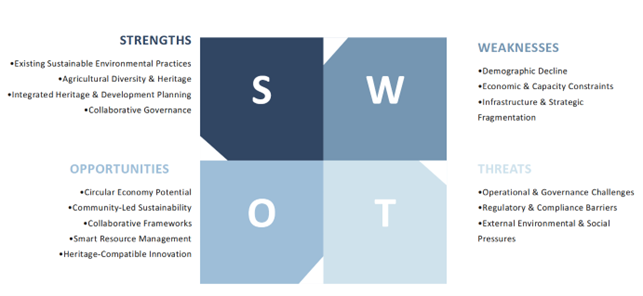
Assessment of strengths, weaknesses, opportunities, and threats for the linear-to-circular transition in the HST context.
Taurasi was selected as a representative case study due to its archetypal characteristics as an Italian borgo. It is classified as a "Hill Borgo" with deep medieval origins, a population of approximately 2,100 inhabitants, and an economic identity inextricably linked to its agricultural heritage — specifically the production of the renowned Taurasi DOCG wine.
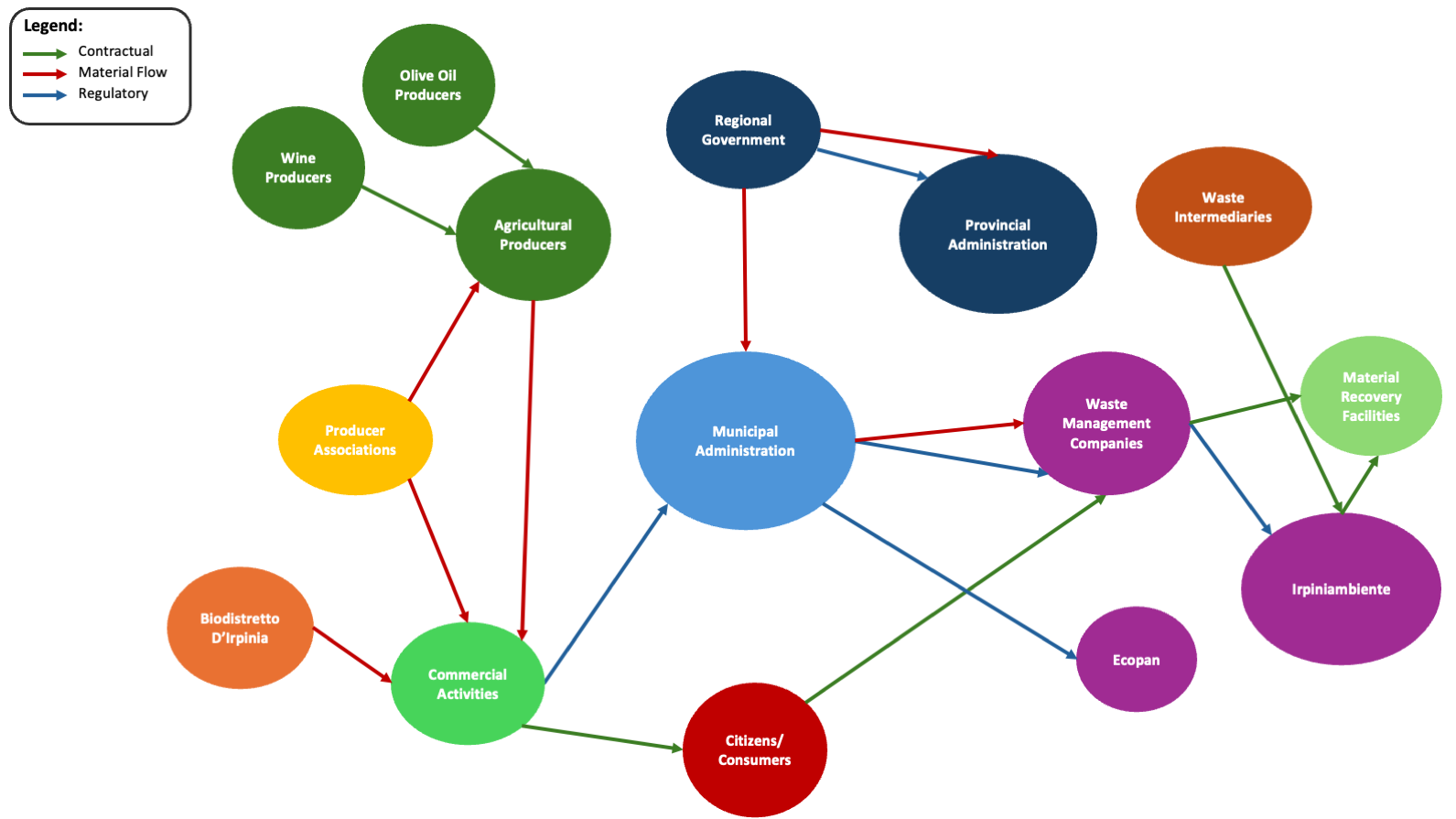
The analysis identified Taurasi's ecosystem as a complex network where municipal governance operates efficiently for urban waste, but remains disconnected from the agricultural sector. A critical gap was found between formal waste management providers (like Irpiniambiente) and the agricultural producers (wineries), who generate the most significant waste streams for circular potential.
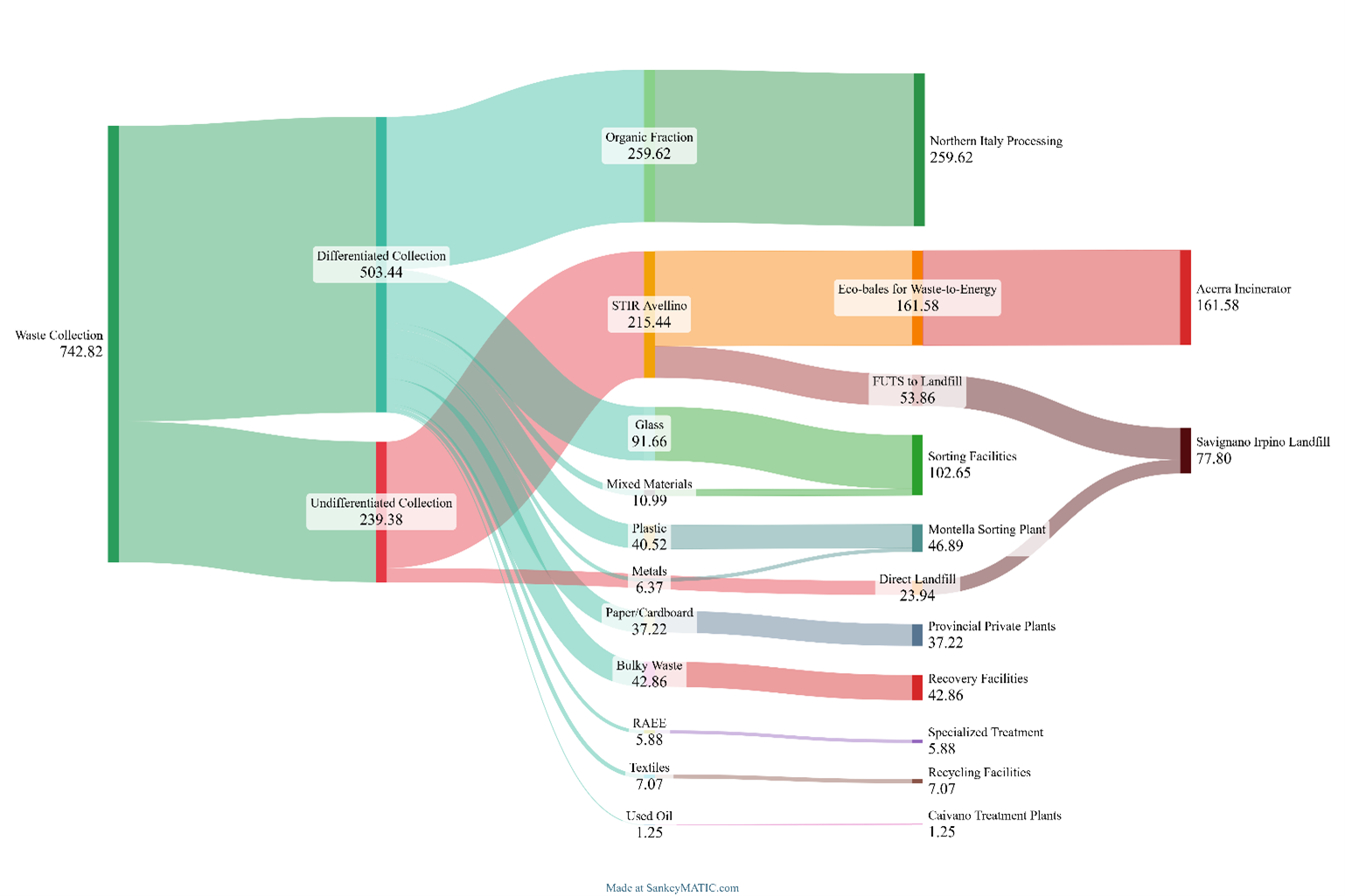
The metabolic analysis characterized Taurasi’s resource usage, showing a 67% municipal waste differentiation rate. However, the study identified substantial underutilized flows in the agricultural sector, specifically organic residue (grape pomace) and glass from the wine industry. The Sankey diagram visualization highlights these streams as the primary targets for closing local loops.
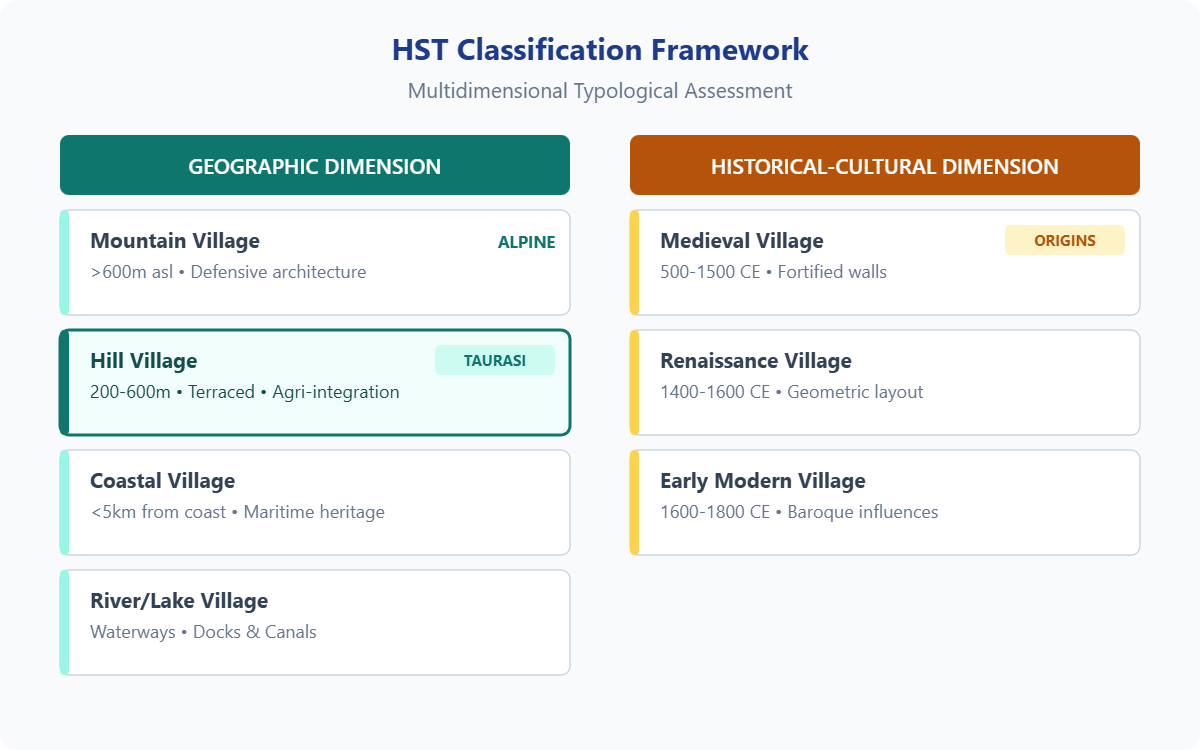
A comprehensive multidimensional classification framework was developed to categorize Italian Historical Small Towns. By integrating geographic (e.g., Hill, Mountain, Coastal), historical-cultural, and economic dimensions, this system moves beyond simple population metrics. It enables the definition of tailored circular economy strategies that align with the unique morphological and productive vocation of different borgo types, distinguishing purely tourism-dependent towns from those with specialized agricultural identities like Taurasi.
The strategic assessment identifies Taurasi’s strong viticultural identity and relatively advanced waste differentiation system as foundational strengths for a circular transition. However, the analysis reveals critical weaknesses linked to demographic decline, economic volatility, and limited technical capacity for implementing innovations within historical constraints. Major opportunities lie in closing local loops for the significant organic and glass waste streams generated by the wine industry, supported by the ‘Bio-distretto’ framework. These potential gains are counterbalanced by threats such as substantial investment requirements versus limited municipal budgets and the complex regulatory challenges of integrating new infrastructure into a protected heritage context.
—
RA2 — Circular Scenario →